
Part of The Embodiment of Mindfulness
The Mindfulness Pathway
Professional Mindfulness Training Rooted in Zen Tradition
The only UK professional mindfulness training led by a Rinzai Zen master. Two clear routes: integrate the training into your existing work, or go on to facilitate standalone courses. IMTA accredited. Over 300 graduates.
 Accredited by the International Mindfulness Teachers Association
Professional Mindfulness Pathway Rooted in a Living Zen Lineage
This Mindfulness Pathway is Zenways’ professional mindfulness training. It was created by Daizan Roshi, the first Englishman to complete traditional Rinzai Zen training in Japan and become a Roshi, and is rooted in a lineage stretching back through centuries of Zen practice.
It is designed for people who want to deepen their understanding of mindfulness and bring it more skilfully into their work with others. There are two clear routes after Module 1: integrate the training into the professional work you already do, or go on to facilitate the structured eight week programme. Both are fully supported, and most graduates take the integration route.
The pathway is accredited by the International Mindfulness Teachers Association (IMTA) and has supported over 300 graduates.
Who This Training Is For
This training is for people who feel a genuine pull to bring mindfulness more deeply into their work with others, whether or not they think of themselves as a facilitator.
Most participants are already working in professional roles where they support other people. They come to deepen their practice, strengthen what they offer, and develop greater discernment in what they already do. Some, in time, also choose to facilitate the standalone eight week programme.
The training is particularly relevant for:
- Therapists, psychotherapists and counsellors
- Clinical and counselling psychologists
- Coaches and leadership development professionals
- Healthcare and NHS professionals
- Educators and university staff working with wellbeing
- Mindfulness practitioners who want to deepen their practice and range
- People in caring or facilitative roles who want to integrate mindfulness into their existing work
You do not need to want a new career as a mindfulness facilitator. You do not need clinical qualifications, a degree or prior teaching experience. What matters is a genuine interest in mindfulness practice and a wish to bring it more skilfully into the work you already do.
Ready to take the next step?
Free guide
Download the pathway guide
The full pathway, dates and fees by email. By Daizan Roshi.
Preview only — sign-up isn’t active on this draft yet.
Module 1 — Foundations of Awareness and Mindfulness
Foundational skills for being able to guide mindfulness in others.
Module 1 develops a grounded foundation in mindfulness practice and the core skills to guide others. It is the starting point of a three module pathway created by Daizan Roshi, accredited by the International Mindfulness Teachers Association (IMTA).
It is designed for two kinds of participant in equal measure. Those who want to integrate mindfulness more deeply into existing professional work or personal life, and those who want to go on to facilitate standalone mindfulness courses. The training equally serves both routes. There is no requirement to facilitate after completing the module.
What You Will Develop
Module 1 is practice led, in keeping with The Embodiment of Mindfulness. This is not personal development for its own sake. Through your own direct, embodied experience of mindfulness, you develop the capacity to hold it for the people you work with, clearly, ethically and with confidence. What you embody yourself, you can offer to others.
During the training you will develop:
- The ability to guide mindfulness and meditation practices with clarity, presence and stillness
- Skill in leading a group, holding space, working with silence and responding to what arises
- Understanding of how mindfulness works at the level of the nervous system, attention and embodied experience, not only as a cognitive concept
- Awareness of the ethical and relational responsibilities of working with others in this way
- Confidence in communicating mindfulness appropriately across professional and everyday settings
- An ongoing practice framework that supports your continued embodiment of the work, so you keep deepening what you can offer to those you work with
You will also learn the complete Zenways eight week Mindfulness and Meditation for Health and Wellbeing programme, written by Daizan Roshi. This gives you a structured, ready to deliver programme if and when you choose to use it. Although rooted in Zen and Buddhist based mindfulness practices, the programme is designed to be suitable for individuals and organisations in both secular and non secular contexts.
What Makes This Training Different
Rooted in a living Zen lineage
This is not a generic mindfulness certification. The training is grounded in the Rinzai Zen tradition, one of the most rigorous contemplative lineages in the world. Daizan Roshi brings over thirty years of Zen practice and training in Japan to every aspect of the curriculum. No other UK mindfulness training offers this depth of lineage.
Practice led, not theory led
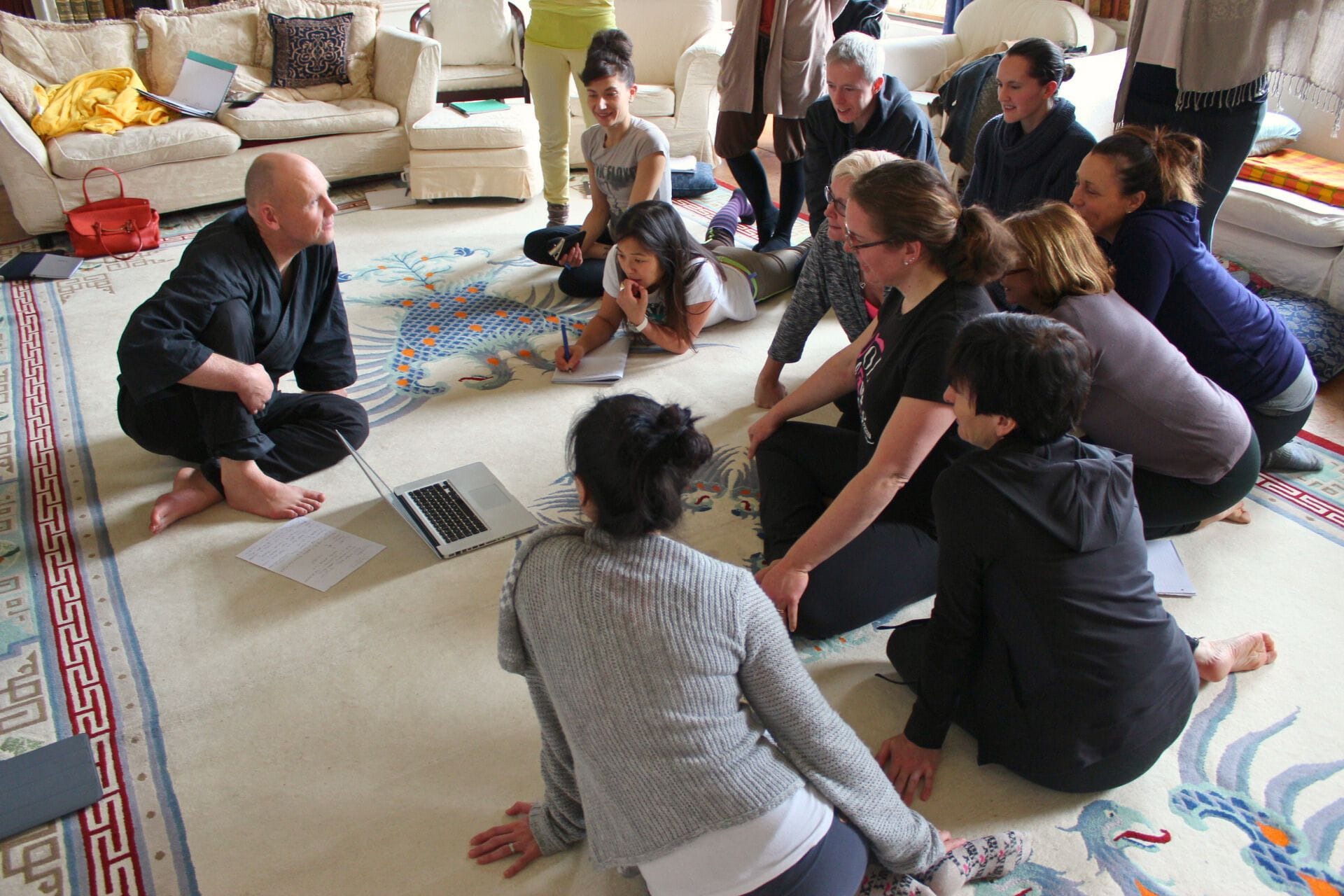
Learning is experiential and immersive. Participants do not study mindfulness as a concept. They practise it directly, embody it through that practice, and learn how to hold it for the people they work with from what they have lived themselves.
Designed for both routes in equal measure
The training is built around the reality that most people will integrate mindfulness into work they already do, while some will go on to facilitate standalone courses. Both routes are fully supported by the curriculum, the mentoring and the materials.
Ongoing community and support
Graduates receive mentoring, access to a private practitioners forum, and remain part of the Zenways practice community. Over 300 graduates have come through Zenways and many remain actively connected.
Ready to begin?
What Module 1 Graduates Do
After completing Module 1, there is no enforced waiting period. You are equipped to begin using what you have learned immediately.
Graduates use Module 1 in a range of ways:
- Integrating mindfulness practices into therapy, counselling or psychotherapy sessions
- Bringing mindfulness into coaching, mentoring or leadership development work
- Offering mindfulness in healthcare, NHS or clinical environments
- Using mindfulness within education, university wellbeing or pastoral support roles
- Facilitating the Zenways eight week programme in community, workplace or private settings
- Deepening their own practice and professional presence without necessarily facilitating publicly
Most graduates integrate the training into the professional work they already do. Some go on to facilitate the eight week course. Many do both at different points in time.
What Graduates Say
“Teaching the eight week course twice a year has shown me what Module 1 really gave me. A structure I can trust, with enough depth that every group, whether teachers, social workers or anyone else, gets something real.”
“I came to Module 1 already working with psychology clinics and medical clinicians. What it gave me was an embodied understanding of mindfulness I can draw on directly in those conversations, rather than something to present as a separate technique.”
“This is a remarkable course, which opened a new career path for me. Daizan lives and breathes the material, in advanced and memorable ways that help it sink in deeply and take root for life. Even now, over a decade later, I draw on this powerful training daily, in my inner practice and in my work with meditation clients. Teacher training with Zenways gave me the skills to become my real self, in meaningful connection with the world.”
How Module 1 Works
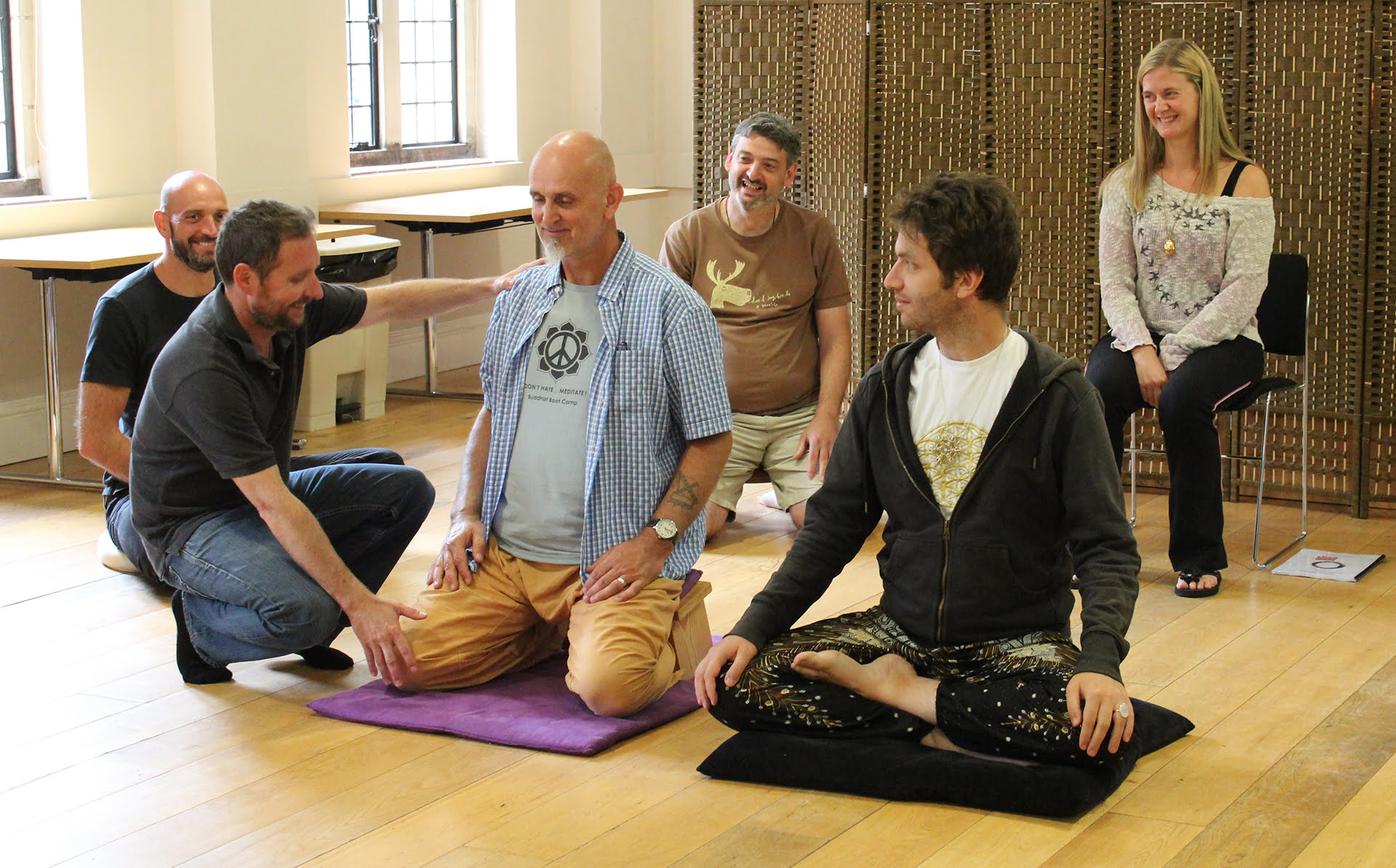
Module 1 begins with a seven day intensive, includes a year of supervised practice, and concludes with a closing weekend. The full module takes approximately twelve months to complete.
The Seven Day Intensive
The core of Module 1 is a seven day immersive training, available in three formats:
- Residential intensive at a retreat centre
- Non residential gradual format, spread over weekends
- Live online, covering the same core material with interactive teaching
All formats meet the same training requirements and allow full progression within the pathway.
Supervised Practice Period
After completing the seven day intensive, you enter a minimum one year period of supervised practice. During this time you begin applying what you have learned in real settings, with personal support from a Zenways mentor.
The Closing Weekend
The closing weekend covers the physiology of meditation posture, the science behind the breath practices, research background, and practical aspects of adapting the work for different groups. It is completed between one and three years after the seven day intensive.
On completing both training elements, you are qualified to facilitate meditation and mindfulness. You are able to integrate the training into your professional work and, if you choose, to lead the Zenways eight week programme.
Fees, Payment and Bursary
| Tuition fee | £1,650 |
|---|---|
| Early bird (bookings 3+ months in advance) | £1,480 |
| Booking deposit | £200 |
Payment in instalments is welcome. Just get in touch via our contact page to arrange.
Zenways also offers one bursary place per course at 50 percent discount on tuition fees. To qualify, we ask for a short proposal outlining how you would offer what you learn to the community or to disadvantaged groups free of charge.
The tuition fee includes all training, mentoring, supervision, assessment, certification and access to the practitioners forum. Accommodation is not included for residential courses.
Accreditation
The Mindfulness Pathway is recognised and accredited by the International Mindfulness Teachers Association (IMTA). Completion of all three modules enables graduates who wish to do so to apply for individual certification at the professional level (CMT P).
Further learning
Module 1 is a complete training in its own right. There is no obligation to continue. For those who wish to develop further:
Module 2 Mindfulness Pathway: Clear Seeing and Energetic Depth deepens insight and adds powerful energetic grounding practices from the Rinzai Zen tradition.
Module 3 Mindfulness Pathway: Maturity of Professional and Ethical Practice develops cultural competency, contemporary applications and the ethical grounding to work authentically across diverse settings. It leads to IMTA professional certification.
About Daizan Roshi
Julian Daizan Skinner is the founder of Zenways and the first Englishman to become a Roshi, or Zen Master, in the Rinzai tradition. He trained for many years in Japan under some of the most rigorous Zen teachers in the world, and has over thirty years of dedicated Zen practice.
Daizan brings this depth of lived experience into everything Zenways offers. He wrote the Mindfulness Pathway curriculum and continues to teach on the programme alongside a team of experienced Zenways tutors and mentors.
Frequently Asked Questions
Do I need to want to facilitate mindfulness to take this training?
No. The training is designed for two clear routes in equal measure. Many participants take it to integrate mindfulness more deeply into the professional work they already do, with no intention of running standalone courses. Others go on to facilitate the structured eight week programme. Both are valid and fully supported.
Who is this training designed for?
Anyone who feels drawn to bring mindfulness more skilfully into their work with others. That includes therapists, psychologists, coaches, healthcare professionals, educators and people in caring or facilitative roles. It is also suitable for those with a strong personal practice who want a more structured developmental framework. You do not need clinical qualifications or prior teaching experience.
What makes Zenways different from other mindfulness training providers?
Zenways is the only UK professional mindfulness training led by a Rinzai Zen master. The training is practice led and experiential rather than primarily academic. It is rooted in a living contemplative lineage rather than a clinical framework. And it is built around the reality that most participants integrate the training into existing work, with facilitating the eight week course as an optional route rather than the assumed end point.
How long does the training take?
Module 1 takes approximately twelve months. Modules 2 and 3 are optional and can be taken in subsequent years. The full three module pathway typically takes two to three years.
What accreditation will I receive?
The pathway is accredited by the International Mindfulness Teachers Association (IMTA). Completion of all three modules enables those who wish to do so to apply for individual certification with IMTA at the professional level (CMT P). The certification is available if you want it, not required.
Can I facilitate straight away after completing Module 1?
Yes. There is no enforced waiting period. After completing Module 1, you are equipped to begin integrating mindfulness into your existing professional work, or to facilitate the eight week programme. Some graduates begin immediately. Others take time to let the learning settle. Both approaches are encouraged.
What is the difference between the residential and online formats?
Both cover the same curriculum and meet the same requirements. The residential format offers deeper immersion. The online format is delivered live and interactively, suitable for those who need flexibility. Both allow full progression within the pathway.
Do I need any prior experience or qualifications?
There are no formal prerequisites other than a genuine interest in mindfulness and meditation practice. You do not need clinical qualifications, a degree, or prior teaching experience.
Do I need to be a Buddhist or part of the Zenways community?
No. The training is rooted in the Rinzai Zen tradition but is delivered in a way that is accessible for people of any background, including those working in entirely secular professional contexts.
What ongoing support is there after the training?
All participants receive personal support from a Zenways mentor throughout their qualification period and beyond. Graduates have access to a private practitioners forum for questions, resources and peer connection. Zenways is a living community, and graduates remain part of that community.
Your Next Step
Module 1 is offered in residential and online formats throughout the year. The full list of upcoming dates is above.
If you would like more clarity before committing, attend a free online introductory session. These are live, interactive evenings hosted by one of our course tutors, with space to ask real questions and sense whether this training is right for you. Numbers are limited.
Have a question, or would you like to talk things through? Just get in touch via our contact page. We will be very happy to help.